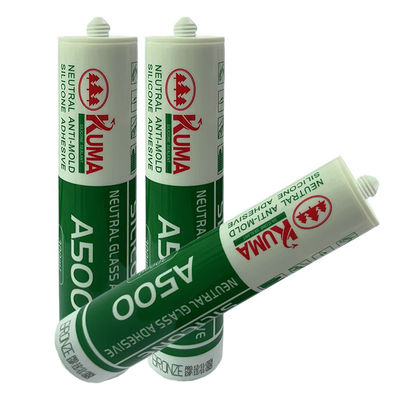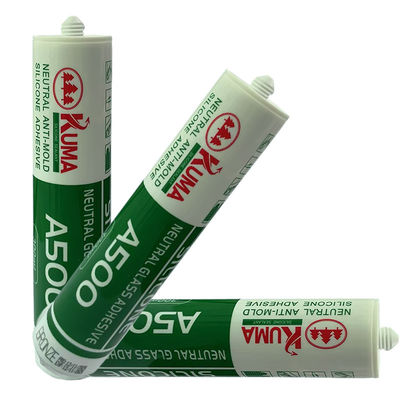
Neutral silicone sealant is a versatile sealing material widely used in construction, automotive, electronics, and household sectors, characterized by its neutral curing system that eliminates corrosion to sensitive substrates such as marble, aluminum, copper, and plastic, making it suitable for both indoor and outdoor applications where substrate protection is critical; it also boasts excellent weather resistance, being able to withstand extreme temperatures, UV radiation, rain, and humidity without losing its sealing performance, along with strong adhesion to a wide range of materials including glass, metal, ceramics, and wood, ensuring reliable and long-lasting sealing effects, while its good flexibility allows it to adapt to slight thermal expansion and contraction or structural movements of the bonded substrates, effectively preventing leakage and maintaining sealing integrity.
Key Features
Neutral curing: No release of corrosive substances, safe for use on delicate and corrosion-sensitive substrates.
Superior adhesion: Forms strong and stable bonds with most common building and industrial materials without the need for additional primers.
Excellent weatherability: Resistant to UV rays, ozone, high and low temperatures (-50℃ to 150℃ typically), and harsh environmental conditions, with long-term performance stability.
Good flexibility: Maintains elasticity after curing, withstanding up to 25%-50% deformation to accommodate substrate movement.
Waterproof and moisture-proof: Forms a dense, impermeable seal that effectively prevents water, moisture, and gas penetration.
Chemical resistance: Resistant to common chemicals, acids, alkalis, and solvents in general environments, ensuring durability in various working conditions.
Non-staining: Does not cause discoloration or pollution to substrates such as stone and metal, maintaining the appearance of the decorated surface.
Applications
Construction industry: Sealing of glass curtain walls, door and window frames (aluminum, PVC, wooden frames), glass joints, ceramic tile gaps, expansion joints of building exteriors, and sealing around balconies and bathrooms; also used for bonding and sealing of interior decoration components such as ceiling panels and wall panels.
Automotive industry: Sealing of automotive windshields, rear windows, sunroofs, body seams, and lighting components; bonding and sealing of interior and exterior decorative parts, as well as sealing of some engine compartment components (with heat-resistant grades).
Electronics industry: Sealing and potting of electronic components, sensors, and electrical enclosures to provide moisture-proof, dust-proof, and insulation protection; bonding of small electronic parts to ensure structural stability.
Household and daily use: Sealing of kitchen sinks, gas stoves, bathroom fixtures (bathtubs, washbasins), and aquarium edges; repair and sealing of household appliances (such as refrigerators, air conditioners) to prevent air or water leakage.
Industrial manufacturing: Sealing and bonding of machinery equipment, pipelines, valves, and containers; sealing of solar panel frames and junction boxes to ensure long-term stable operation in outdoor environments.
Marine industry: Sealing of small marine vessels' windows, hatches, and body seams, with good resistance to seawater corrosion.