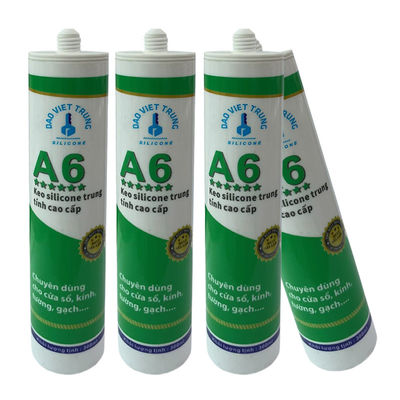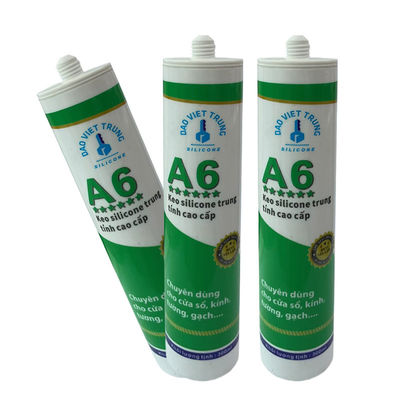
Acidic silicone sealant is a high-performance elastomeric sealant widely used in construction, automotive, electronics, and household sectors, characterized by its rapid curing speed even in normal temperature environments, which significantly shortens the construction cycle and improves work efficiency. It exhibits excellent adhesion to a variety of substrates, including glass, aluminum alloy, ceramic, plastic, and concrete, forming a tight and durable bond without the need for additional primers in most cases. Additionally, this type of sealant possesses superior weather resistance, capable of withstanding extreme temperature fluctuations (ranging from -50℃ to 150℃), ultraviolet radiation, rain, snow, and humidity without losing its sealing performance or structural integrity. It also has good chemical resistance to common acids, alkalis, and organic solvents, as well as excellent electrical insulation and waterproof properties, making it suitable for both indoor and outdoor sealing applications where reliability and long-term stability are required. Its flexible elastomeric nature allows for slight deformation of the sealed joints without cracking, effectively accommodating the thermal expansion and contraction of substrates and preventing water leakage, air infiltration, or dust accumulation.
2. Features
Fast curing: Achieves surface drying within a short time (usually 15-30 minutes) and full curing within 24 hours under standard conditions, enabling quick follow-up construction.
Strong adhesion: Forms firm bonds with most common building and industrial substrates, ensuring good sealing effect and structural stability.
Excellent weatherability: Resists UV radiation, ozone, extreme temperatures, and harsh weather conditions, maintaining performance for a long service life (typically 10-20 years).
Good flexibility: Retains elasticity after curing, with a high elongation rate (usually over 300%), adapting to substrate expansion and contraction.
Superior waterproof and dustproof: Forms a dense, impermeable seal, effectively preventing water, air, and dust from entering the joints.
Chemical resistance: Resists corrosion from common chemicals, such as weak acids, weak alkalis, and general organic solvents, suitable for diverse working environments.
Easy to use: Available in cartridges for convenient application with a caulking gun, and can be smoothed with a tool for a neat finish before curing.
3. Applications
Construction industry: Sealing of glass curtain walls, door and window frames (especially aluminum alloy and PVC windows), glass joints, bathroom and kitchen tiles, bathtubs, sinks, and ceiling gaps; sealing of expansion joints in concrete walls, floors, and roofs.
Automotive industry: Sealing of automotive glass (windshields, side windows, rear windows), lighting fixtures, body seams, and interior decorative parts; waterproof sealing of engine compartments and trunk gaps.
Electronics industry: Sealing and potting of electronic components, such as sensors, transformers, and circuit boards, to provide moisture-proof, dust-proof, and electrical insulation protection.
Household and daily use: Sealing of household appliances (refrigerator door gaps, oven windows), aquarium edges, solar water heater joints, and various decorative gaps in homes.
Industrial equipment: Sealing of pipelines, valves, pumps, and other industrial equipment to prevent leakage of liquids or gases; sealing of machine tool components to resist oil and dust.
Furniture manufacturing: Sealing of wooden furniture joints, edge banding, and glass inserts in furniture, enhancing the durability and aesthetics of furniture.