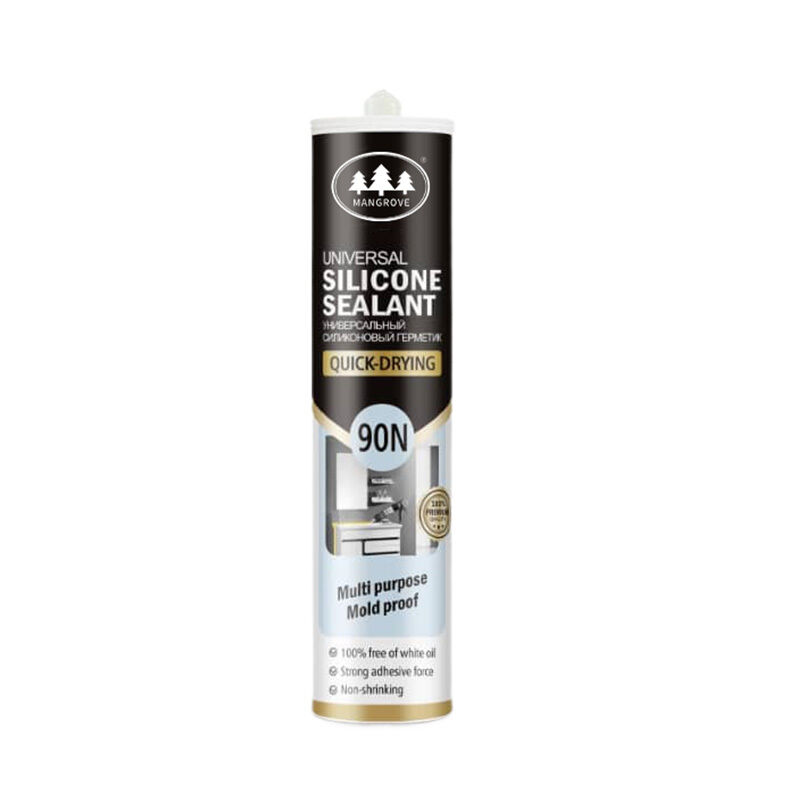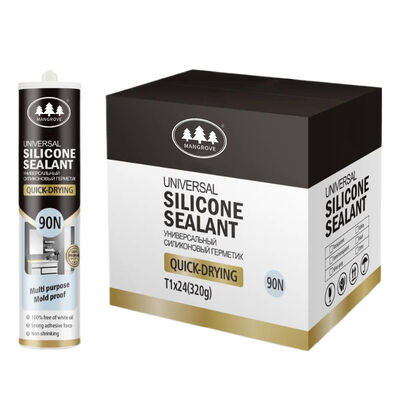
Neutral silicone sealant is a high-performance, one-component, room-temperature vulcanizing (RTV) sealant that finds extensive application across a broad spectrum of industries, including construction, residential home decoration, automotive manufacturing and maintenance, electronic equipment production, and marine engineering. It is specifically designed to seal moving joints, expansion joints, structural seams, and irregular gaps on a wide variety of substrates, such as float glass, tempered glass, aluminum alloy, stainless steel, carbon steel, solid wood, engineered wood, PVC, ABS plastic, concrete, mortar, ceramic tiles, natural stone, and enamel surfaces. Its core selling points are centered around its unique neutral curing formula, which sets it apart from acidic silicone sealants by not releasing corrosive acetic acid or pungent odors during the curing process—this ensures complete safety for sensitive materials like copper, brass, aluminum, chrome-plated surfaces, and painted coatings, preventing discoloration, corrosion, or damage. Additionally, it boasts exceptional adhesion properties, forming strong, long-lasting bonds with most common building and industrial materials without the need for a separate primer, reducing application time and labor costs. The sealant also exhibits outstanding durability and weatherability, capable of withstanding harsh environmental conditions such as intense ultraviolet (UV) radiation, extreme temperature fluctuations ranging from -40℃ to +150℃ (depending on the specific formulation), high humidity, heavy rainfall, snowfall, and ozone exposure. After full curing, it maintains permanent flexibility and elasticity, allowing it to effectively absorb the stresses caused by thermal expansion and contraction of substrates, mechanical vibrations, or structural settlement, thereby avoiding cracking, peeling, or detachment. Furthermore, it provides reliable waterproof, mold-resistant, and chemical-resistant performance, making it suitable for both indoor and outdoor use, and ensuring long-term stable sealing effects in various environments, from damp bathrooms and kitchens to exposed exterior building facades and marine settings.
Features
Neutral Curing Mechanism: Unlike acidic silicone sealants that release corrosive acetic acid, neutral silicone sealant cures through a non-corrosive, acid-free reaction, producing low to no odor during the curing process. It does not emit harmful substances such as volatile organic compounds (VOCs) in excessive amounts, making it safe for use on sensitive substrates including copper, aluminum, stainless steel, chrome-plated parts, painted surfaces, and plastic components. This feature makes it ideal for applications where material protection is critical, such as automotive trim, electronic components, and high-end furniture.
Excellent Adhesion Performance: It demonstrates strong and reliable adhesion to a comprehensive range of substrates without the need for a primer in most cases, including glass (float, tempered, laminated), metals (aluminum, stainless steel, carbon steel, brass), wood (solid wood, plywood, MDF), plastics (PVC, ABS, PC), concrete, mortar, ceramic tiles, natural stone (marble, granite), and enamel. The adhesion is not only immediate upon application but also strengthens over time, ensuring a tight, leak-proof seal that resists separation even under mechanical stress or environmental changes.
Superior Weather Resistance: Engineered to withstand the harshest outdoor conditions, the sealant is highly resistant to ultraviolet (UV) radiation, ozone, rain, snow, sleet, and extreme temperature variations. Its operating temperature range typically spans from -40℃ to +100℃ for standard formulations, and up to +150℃ for high-temperature resistant variants, maintaining its physical and chemical properties without aging, cracking, discoloration, or brittleness even after years of continuous outdoor exposure. This makes it perfect for exterior building applications, such as glass curtain walls, window frames, and exterior wall gaps.
Permanent Elasticity and Flexibility: After complete curing (usually 24-48 hours at room temperature), the sealant retains excellent flexibility and elasticity, with a high elongation at break (often exceeding 300%). This allows it to accommodate the differential movements caused by thermal expansion and contraction of building materials, mechanical vibrations from machinery or vehicles, and minor structural settlements, effectively absorbing these stresses without losing its sealing integrity or developing cracks, thus ensuring long-term seal performance.
Waterproof and Mold-Resistant Properties: The sealant forms a dense, impermeable barrier after curing, providing excellent water tightness and moisture resistance that prevents water leakage, moisture penetration, and water damage to substrates. It also contains anti-microbial additives that effectively inhibit the growth of mold, mildew, and bacteria, making it suitable for use in damp and humid environments such as bathrooms, kitchens, swimming pools, saunas, and basements, where mold growth is a common concern.
Easy Application and Tooling: With good extrudability, the sealant can be smoothly and evenly applied using a standard caulking gun, even in hard-to-reach areas. It has excellent tooling performance, allowing workers to shape and smooth the sealant line with a tool or gloved hand immediately after application, creating a neat, uniform finish. It can be applied at temperatures between 5℃ and 40℃, with minimal shrinkage (usually less than 3%) during curing, ensuring that the sealant fills gaps completely without leaving voids.
Strong Chemical Resistance: It is resistant to a wide range of common chemicals, including household cleaners, detergents, oils, greases, weak acids, weak bases, and industrial pollutants. This resistance ensures that the sealant does not degrade, soften, or lose its performance when in contact with these substances, making it suitable for use in industrial settings, automotive engine bays, and areas where chemical exposure is possible.
Applications
Construction Industry: This is one of the primary application areas for neutral silicone sealant. It is widely used for the sealing of window systems, including aluminum alloy, wood, and PVC window frames, ensuring airtightness and watertightness to improve energy efficiency and prevent water leakage. It is also essential for the installation and sealing of glass curtain walls, where it bonds glass panels to aluminum frames securely while accommodating thermal expansion. Additionally, it is used for the waterproof sealing of exterior wall gaps, expansion joints, and connection joints in concrete structures (such as bridges, tunnels, and high-rise buildings) to prevent water penetration and structural damage. In interior and exterior decoration, it is used for sealing ceramic tiles, natural stone, and masonry, filling gaps between tiles or stone slabs to prevent moisture accumulation and enhance the aesthetic appearance. It also complies with the EN 15651-2 standard (Type G) for glazing applications, ensuring it meets the strict performance requirements for structural glazing.
Home Decoration: In residential settings, neutral silicone sealant is an indispensable tool for various sealing tasks. In kitchens, it is used to seal the gaps around sinks, stovetops, and countertops, preventing water, oil, and food residues from seeping into gaps and causing mold growth or damage to cabinets. In bathrooms, it seals the edges of bathtubs, shower enclosures, washbasins, and toilet bases, as well as the corners where walls and floors meet, providing a waterproof barrier that keeps the space dry. It is also used for bonding and sealing various decorative materials, such as mirror installation, decorative panels, and skirting boards, ensuring they are firmly fixed and aesthetically pleasing.
Automotive and Marine Industries: In the automotive industry, it is used for the sealing of automobile windshields and rear windows, bonding the glass to the car body to ensure structural integrity, airtightness, and watertightness. It also seals body gaps, door frames, trunk lids, and engine components, preventing water, dust, and noise from entering the vehicle interior. In the marine industry, it is highly suitable for sealing boat hulls, cabins, deck joints, and marine equipment, as it is resistant to saltwater erosion, high humidity, and constant vibration, ensuring the airtightness and watertightness of marine vessels and protecting internal components from corrosion.
Electronics and Electrical Appliances: Neutral silicone sealant is widely used in the electronics industry for the sealing and moisture-proof protection of sensitive electronic components, such as circuit boards, sensors, and connectors. It forms a protective barrier that prevents moisture, dust, and other contaminants from entering, extending the service life of electronic products. In household appliances, it is used for sealing the casings of refrigerators, air conditioners, washing machines, and ovens, as well as wire and cable interfaces, providing electrical insulation and preventing water or dust from damaging internal parts. Its non-corrosive nature also ensures it does not damage delicate electronic components.
General Industrial and DIY Uses: In general industrial settings, it is used for the sealing of mechanical equipment flanges, threaded pipes, screws, and pipe joints, preventing the leakage of gases, liquids, or lubricants. It is also suitable for bonding and sealing in DIY craft projects, such as making handmade decorations, repairing household items, and assembling small structures. For aquariums, selected food-grade neutral silicone sealants (meeting safety standards for aquatic environments) are used to seal the glass panels, as they are non-toxic after curing and do not harm fish or aquatic plants. Additionally, it can be used for sealing gaps in furniture, toys, and other daily items, providing a quick and effective repair solution.