| Brand Name: | HONGSHUYE |
| Model Number: | 43 |
| MOQ: | 1000pcs |
| Price: | Negotiation |
| Payment Terms: | L/C,D/A,D/P,T/T,Western Union, |
| Supply Ability: | 1000000 Pieces per Month |
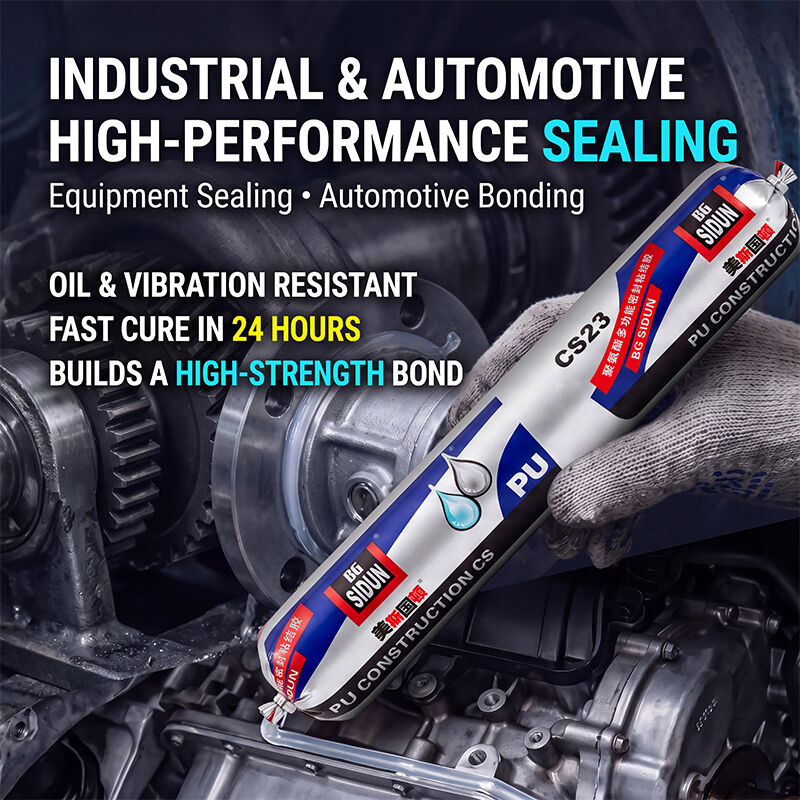
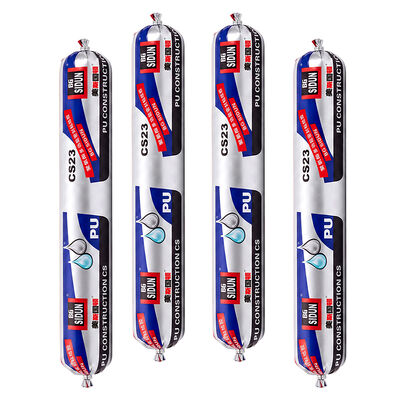
Polyurethane Concrete Joint Sealant for Cement Surfaces, Masonry Connections, Concrete Expansion Joints, Building Maintenance and Construction Sealing Projects
1. Product Overview
Concrete and Masonry Joint PU Sealant is positioned for sealing applications involving compatible concrete, cement-based and masonry substrates.
Concrete structures are widely used in residential buildings, commercial properties, industrial facilities, roads and other construction projects.
During construction and maintenance, joints may be formed between different concrete sections or between concrete and other building components.
These joints require suitable sealing materials according to their dimensions, movement requirements and environmental conditions.
A compatible polyurethane sealant may provide a practical sealing solution for selected concrete and masonry joints.
This product category is intended for construction contractors, concrete repair companies, building maintenance businesses, infrastructure material suppliers and construction sealant distributors.
2. Designed for Concrete Joint Sealing
Concrete joints may occur in different parts of a building or construction structure.
Examples include selected wall joints, floor joints, concrete panel connections and interfaces between different building components.
A suitable PU sealant may be used to seal compatible joints and help reduce the entry of unwanted air, dust or moisture where the product is approved for the intended exposure conditions.
The actual performance depends on the product formulation, joint design and installation procedure.
Customers should select a sealant with suitable technical properties for the intended concrete application.
3. Applications in Cement-Based Materials
Cement-based materials are common in modern construction.
These may include concrete, mortar, cement boards and other related building substrates.
Different cement-based materials may have different porosity, surface strength and moisture conditions.
A suitable polyurethane sealant may provide an option for selected joint sealing applications involving compatible cement-based surfaces.
Before application, installers should inspect the substrate and confirm that the surface is sufficiently sound for the intended sealing work.
Loose concrete, dust, laitance and other contaminants should be addressed according to the manufacturer's preparation instructions.
4. Masonry Joint and Wall Connection Applications
Masonry structures may contain joints between bricks, blocks and other construction materials.
Certain connections may require flexible sealing materials to accommodate the intended joint movement and environmental conditions.
A compatible PU sealant may be considered for selected masonry interfaces and building connection joints.
Applications may include certain wall joints, selected construction gaps and interfaces between masonry and other approved substrates.
The sealant should be selected according to the actual joint configuration and product movement capability.
It should not be treated as a replacement for mortar, structural reinforcement or other materials required by the building design.
5. Residential and Commercial Building Maintenance
Concrete and masonry maintenance is an important part of building management.
Over time, selected joints may require inspection and resealing because of aging materials, environmental exposure or changes in building conditions.
A suitable PU joint sealant may be considered for approved maintenance and renovation applications.
Building maintenance contractors may use it for selected concrete interfaces, masonry connections and other compatible sealing tasks.
Before resealing an existing joint, installers should evaluate the condition of the old sealant and surrounding substrate.
Any damaged or unsuitable material should be handled according to the recommended repair procedure.
6. Joint Movement and Product Selection
Different concrete joints have different movement requirements.
Some joints are designed primarily for construction separation, while others may experience temperature-related movement or other changes.
The selected sealant should have movement capabilities appropriate for the intended joint design.
Important parameters may include elongation, movement capability, modulus, curing characteristics and adhesion to the specified substrates.
These properties vary between PU sealant grades and must be confirmed using the actual product datasheet.
Customers should not assume that every polyurethane sealant is suitable for high-movement expansion joints.
7. Surface Preparation and Application Procedure
Proper surface preparation is essential for concrete and masonry joint sealing.
Before application, installers should inspect the joint and surrounding surfaces.
Loose particles, dust, oil and other contaminants should be removed according to the manufacturer's instructions.
The joint dimensions should be checked, and suitable backing materials may be required to control sealant depth.
Primer may be necessary for certain substrates or applications, depending on the product specification.
The sealant should be applied evenly using suitable application equipment.
After application, tooling and curing should follow the technical instructions.
8. Weather and Environmental Conditions
Concrete joints may be exposed to different environmental conditions.
These can include temperature changes, humidity, sunlight and occasional water exposure.
The suitability of a PU sealant for these conditions depends on its actual formulation and test results.
For outdoor applications, customers should confirm the product's documented resistance to weathering, UV exposure and other relevant environmental factors.
For areas exposed to continuous water immersion or aggressive chemicals, a specialized product may be required.
The intended use should always be checked against the technical documentation.
9. Technical Information for Professional Buyers
Concrete contractors and construction material distributors may require detailed technical information before selecting a joint sealant.
Relevant information may include:
Recommended concrete and masonry substrates.
Joint width and depth recommendations.
Movement capability.
Curing characteristics.
Application temperature.
Primer requirements.
Packaging size and storage conditions.
Providing accurate product documentation helps professional users evaluate whether the sealant is suitable for their construction projects.
Customers may request the available technical datasheet and product specifications before purchasing.
10. Wholesale Supply and OEM Cooperation
Concrete and Masonry Joint PU Sealant can be positioned for construction material importers, concrete repair suppliers, building maintenance distributors and professional sealant wholesalers.
For international customers, packaging specifications, labeling requirements and export arrangements may be discussed according to the actual product range.
OEM and private-label packaging may also be available according to manufacturing capabilities and order requirements.
We welcome inquiries from concrete contractors, building material distributors, infrastructure suppliers and international importers seeking polyurethane sealant products for compatible concrete and masonry joint applications.
Areas of Application
Suitable for automotive windshield and side & back window glass replacement bonding.
Product Features
Technical Date
| Items | Renz20 | |
| Scope | Typical value | |
| Appearance |
Black, homogeneous paste |
/ |
| Extrudability (ml/min) GB/T 13477.4 | ≥40 | 60 |
| Sagging properties(mm) GB/T 13477.6 | 0 | 0 |
| Tack free time(min) GB/T 13477.5 | 10~40 | 25 |
| Curing speed(mm/d)HG/T 4363 | ≥3.0 | 3.2 |
| Non-volatile contents (%)GB/T 2793 | ≥99 | 99 |
| Shore A-hardness GB/T 531.1 | 45~60 | 55 |
| Tensile strength(MPa) GB/T 528 | ≥6.0 | 6.5 |
| Elongation at break(%) GB/T 528 | ≥400 | 450 |
| Tear strength (N/mm) GB/T 529 | ≥8.0 | 9.5 |
| Tensile-shear strength (MPa) GB/T 7124 | ≥3.5 | 4.0 |
| Operating temperature(℃) | -40~90 | |
Direction for use = 1 * GB3 All data above were tested under standardized condition at 23±2℃.50±5%RH.
FAQ
Yes. We are a large Chinese factory located in Guangdong
The quotation can be provided not longer than 24 hours on condition that we know all detailed require- ments.
Yes. We can do OEM for customers.
Of course. Generally, we provide 1-5 pieces free samples for quality testing and the courier fee be born by customers. Thank you for your understanding.
Yes, Generally, MOQ is 3000pcs.
It is depend on your order quantity. Generally, we just need 7 days to produce 10000 pieces, 600ml sausa- ge after receive your payment.
Welcome. Please let me know your trip plan, we would like pick you up and book hotel for you.
Please let me know your application purpose, substrate, application method and all your requirements.
Factory Information:
With 20 years of experience in glue production, the factory covers an area of 40,000 square meters, equipped with highly mechanized equipment. The daily output is 30,000 pieces, and there are more than 200 production and R & D personnel. The source factory supports OEM/ODM. The products are cost-effective. We look forward to your contact.
Factory Pictures